Santa Maria di Zevio is a small hamlet near Verona where over a hundred cremation graves have been found, dating from the 2nd century BC to the early Imperial age.
Continue reading The necropolis of Santa Maria di Zevio (VR)
Santa Maria di Zevio is a small hamlet near Verona where over a hundred cremation graves have been found, dating from the 2nd century BC to the early Imperial age.
Continue reading The necropolis of Santa Maria di Zevio (VR)
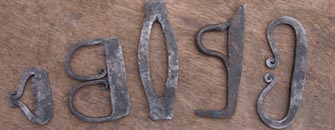
As early as the Upper Palaeolithic, some 14,000 years ago, it seems that man was able to make fire by striking stones together: at the sites of Laussel (France) and Trou-de-Charleux (Belgium), nodules of pyrite with clear traces of percussion have been found.
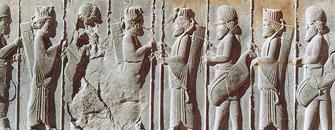
The quiver is a roughly cylindrical case, made from a wide variety of materials, designed to hold arrows and allow them to be used conveniently when shooting with a bow.
The main element in ferrous metals is, naturally, iron, which only occurs in metallic form when bonded to other elements (unlike copper, gold and silver, which are found in nature already in metallic form).
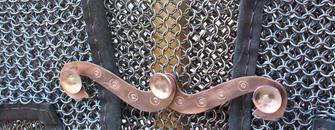
Armour made of interlinked iron rings forming a metal “fabric” is one of the most widely used forms of protection in history.
Traces of a Roman presence in Pesaro are still evident today: just think of the mosaics, the old bridge, and the many finds of road paving and boundary stones.