
As early as the Upper Palaeolithic, some 14,000 years ago, it seems that man was able to make fire by striking stones together: at the sites of Laussel (France) and Trou-de-Charleux (Belgium), nodules of pyrite with clear traces of percussion have been found.
As early as the Upper Palaeolithic, some 14,000 years ago, it seems that man was able to make fire by striking stones together: at the sites of Laussel (France) and Trou-de-Charleux (Belgium), nodules of pyrite with clear traces of percussion have been found. Later on, evidence of this practice multiplies, and together with the pyrite many pieces of tinder begin to turn up, in particular of a fungus (Fomes Fomentarius).
From the first farming cultures (Neolithic) onwards, the flint-and-pyrite fire-lighting kit is found in burials, thereby also acquiring a symbolic and ritual value.
A famous piece of evidence is the Similaun mummy (more commonly known as Otzi, who lived over 5,000 years ago): researchers discovered, hidden inside a pouch sewn onto his belt and used as a bum bag, some pieces of Fomes Fomentarius with flakes of pyrite on their surface, the residue of repeated fire lighting. It seems that Otzi, once he had lit the fire by striking a piece of pyrite against some flint, carried with him pieces of fungus that were already smouldering (wrapped in fresh maple leaves to keep it dry), from which he could take, when needed, small pieces of live embers ready to produce flames.
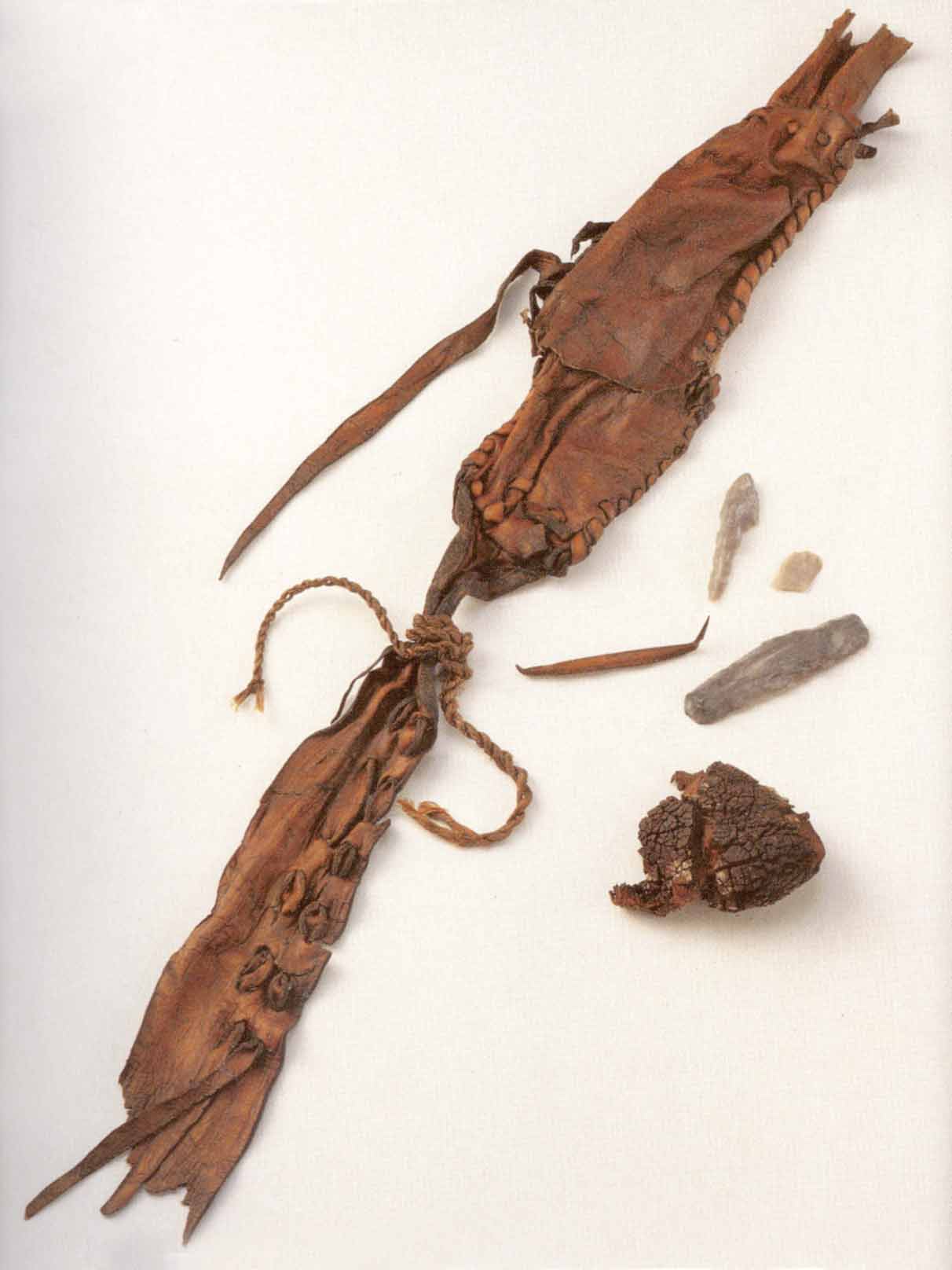
fragments of Otzi’s belt with some of the objects kept inside it, including the fungus used as tinder for fire lighting. [photo source: http://www.archaeologiemuseum.it]
The use of the steel fire striker to light fires must necessarily be dated to the late Iron Age, in connection with the ability to produce steel with a sufficient carbon content. The fire striker was therefore struck against a flint (silex), exactly as had been done with pyrites and marcasites.
In the classical sources there are numerous references to the known methods of lighting a fire: in the Aeneid, Virgil tells how Achates lit a fire by drawing sparks from a struck stone.
Theophrastus gives us numerous written accounts of the techniques used to make fire:
Why is wood used as a fire-lighter and not stone? And yet wood does not give off sparks, whereas stone does. But this is not true, because from many kinds of stone fire is produced better and more quickly. In any case, we must suppose this to be the cause: that wood has a substance that catches fire immediately, because particles akin to fire are inherent in it; so if wood is brought close to fire, nothing catches more quickly, owing to its weakness. Stone, on the other hand, is not flammable because it is very dry: for this reason it is brought up to the tinder as soon as the spark has been struck.
Pliny the Elder tells of a certain Pyrodes of Cilicia who, according to him, was the inventor of fire generated from flints:
[…] Pyrodes, son of Cilix, was the first to strike fire from a stone, and Prometheus the first to preserve it inside a reed […]
Titus Lucretius Carus, a Roman poet and philosopher who lived in the 1st century BC, speaking of lightning, explains its origin by likening the phenomenon to the sparks produced by stone striking stone, or stone striking steel:
Likewise it lightens, when from the clash / Of opposing clouds many seeds of fire / Are shaken out; in just the way / That, when stone is struck by stone or by tempered / Steel, a bright light spreads all around / And scatters living golden sparks of fire.
It therefore seems that in the first centuries of the Iron Age the fire-lighting methods already known for millennia were still in use: this is the context in which the steel fire striker came into use, at first as an item reserved for the wealthiest, and later as an indispensable tool for anyone far from an already burning hearth; it should in fact be remembered that in antiquity fire was rarely allowed to go out completely, and in towns and villages, just as in the homes of our great-grandparents, there were always one or more hearths kept constantly alight.
In the Middle Ages, on the other hand, there are many sources attesting the use of fire strikers, given the countless archaeological finds.
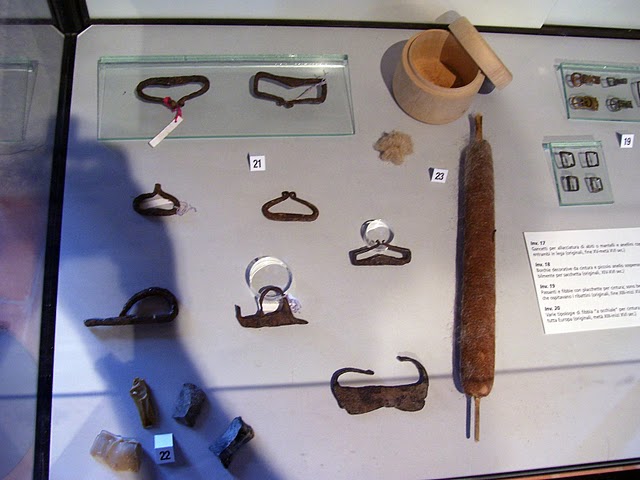
Some fire strikers displayed at the museum of S. Leo during the temporary exhibition “Guerra e quotidianità a S. Leo nel Medioevo” (23 March – 30 September 2008), belonging to a private collection and coming from central Italy, Germany and the Balkans. My thanks to Dr Andrea Carloni (pugnalespada@hotmail.it) – museum display designer specialising in the late 15th century – for his kind help. [Photo source: internet].
As for its construction, the fire striker had to be made of steel with a fair carbon content, a feature that implies a manufacturing process which in ancient times was rather complicated, known as cementation: the metal, low in carbon, was covered with a substance containing charcoal powder and subjected to extremely high temperatures (over 1000 °C). At those temperatures, after hours of exposure, carbon is absorbed into the surface layers of the metal, in the form of carbon monoxide; this extremely thin layer probably required several treatments over time so that the fire striker could be “recharged” and thus produce sparks again once the surface layer had worn away.
The earliest archaeological finds of fire strikers, from various parts of Europe (Belgium, Denmark, Germany), date to the Iron Age; they show an essentially uniform range of shapes, designed to ensure a good grip and to protect the fingers from striking the flint, shapes so well conceived that they remained unchanged over the centuries and, in some parts of the world, were even used until the 1950s.
There are numerous finds from the Roman period, some of which have shapes that (probably) allowed them to be hung from the belt by means of small rings.
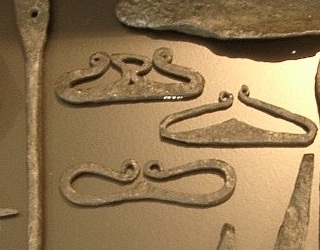
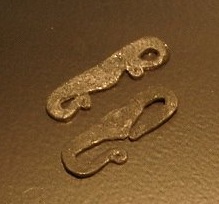
National Museum of Copenhagen, finds dating to the Iron Age (of northern Europe, hence roughly 6th century BC – 8th century AD) [photo source: internet]
In the Middle Ages, too, there are many sources attesting the use of fire strikers, given the countless archaeological finds.
In the following centuries the fire striker continues to appear regularly among finds from the Migration Period throughout Europe; here too, the numerous archaeological finds bear witness to it.
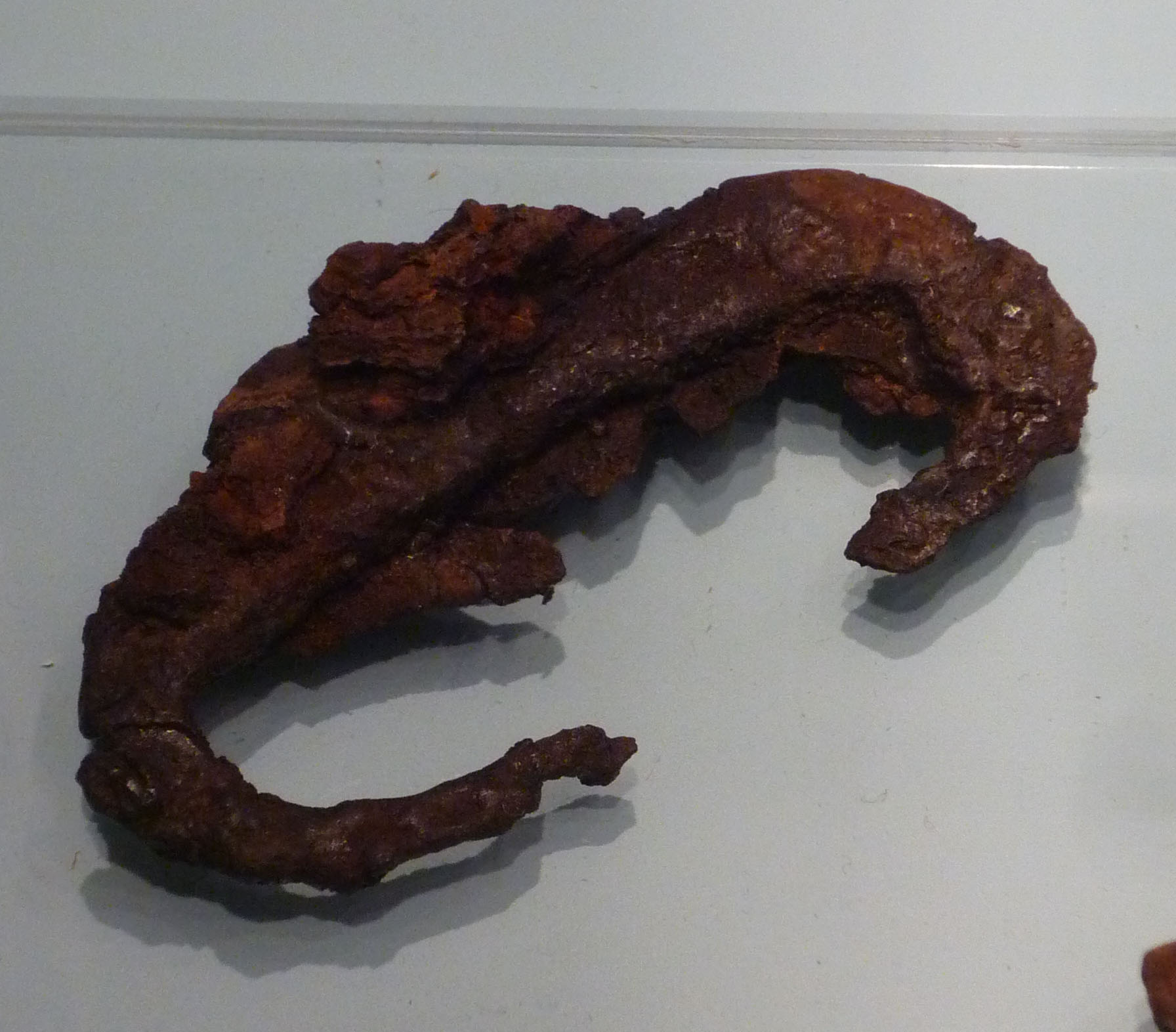
Lombard fire striker kept in the museum of Arsago Seprio (VA), from grave 13
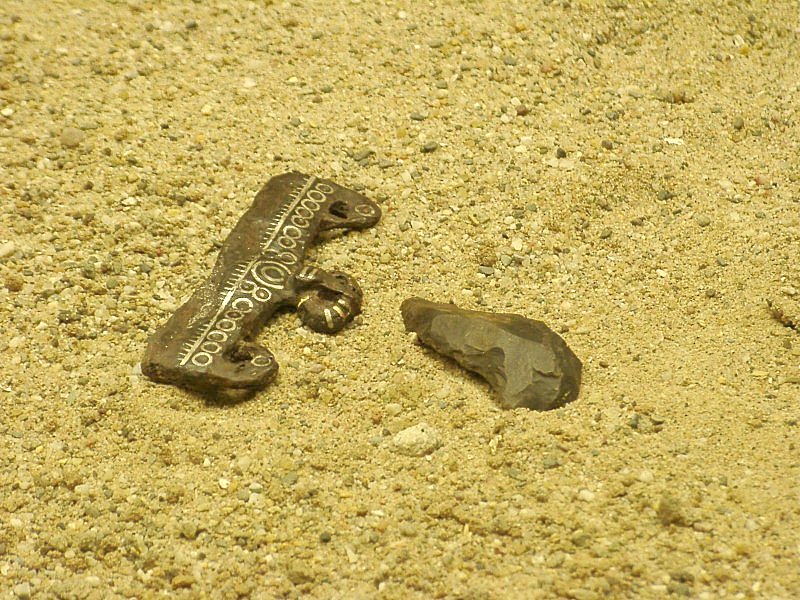
Burg Linn Museum, Krefeld, Germany, warrior grave of the 5th century AD. The grave also contained a piece of flint and a finely decorated fire striker with bird-head terminals and a sort of buckle in the central part, probably used to hang the fire striker from the belt. [photo source: http://www.archaeologie-krefeld.de]
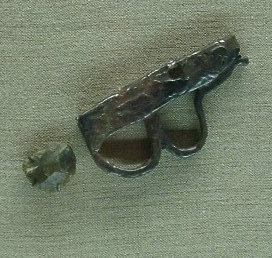

Burg Linn Museum, Krefeld, Germany, 5th century AD (?). More photos of fire strikers [photo source: http://1501bc.com/]
There seems to be no precise medieval documentation of fire-lighting techniques, although many scholars speak in general terms of the use of metal fire strikers, some of them stylistically very elaborate. The evidence for it becomes more varied, extending to depictions on the coats of arms of different houses, for example the coat of arms of the kingdom of Bulgaria, where a stylised fire striker already appears in 1100.
With the discovery of gunpowder, a technique for igniting the powder as quickly as possible soon became indispensable: this is how the fire striker took on a leading role, not only as a tool but as a genuine integral part of firearms. A quick search of the Pianigiani etymological dictionary, available online, gives the following definition: from the old FOCILE […] which also had the meaning of flint, fire striker, and hence later the meaning of gun […], so that the word fucile (rifle) can be traced back to the fire striker.
At the beginning of the 16th century, perhaps also thanks to improvements in steel technology, the first mechanical firing mechanisms appeared in Europe, alongside the lever-operated models fitted with a serpentine holding a glowing match.
Thus began the production of “wheel” mechanisms, in which a small “wheel”, spring-loaded with a key, spun rapidly in contact with a piece of pyrite (later replaced by the more durable flint) held firmly by a special clamp, called the “cock”.
Many scholars attribute to the French gunsmith Marin le Bourgeoys (around 1610) the form of lock known as “modern”, which eventually became the standard for the infantry of European armies in the second half of the 18th century.
The drawing shown below illustrates how the gunpowder is ignited in a typical musket flintlock system
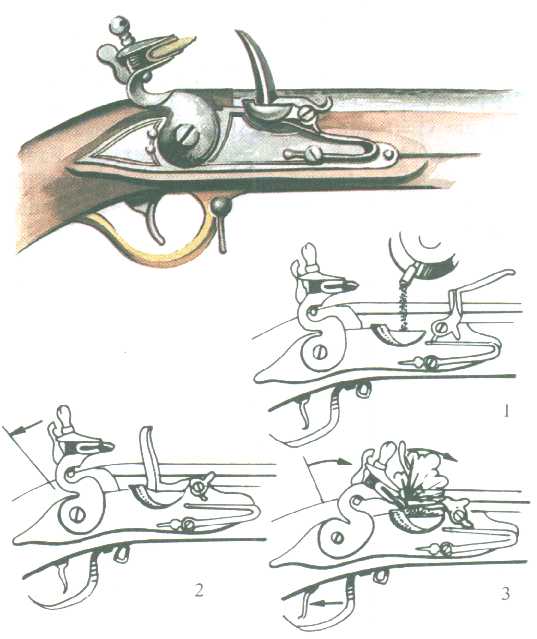
[photo source: internet, but the original source is a German manual from the GDR. My thanks to Mr Mori (www.earmi.it) for his kind help]
The flint is gripped between two jaws and mounted on the cock which, as it comes down driven by a strong spring (figure 2), creates friction between stone and steel, producing sparks that ignite first the powder placed in the pan below (figure 1), then the main charge inside the barrel (figure 3), and thus allow the weapon to fire.
Needless to say, the trade in and working of gunflints must have been very important: it gave rise to specific tools for working them, as well as trades and even the names of villages where flint was quarried or worked.
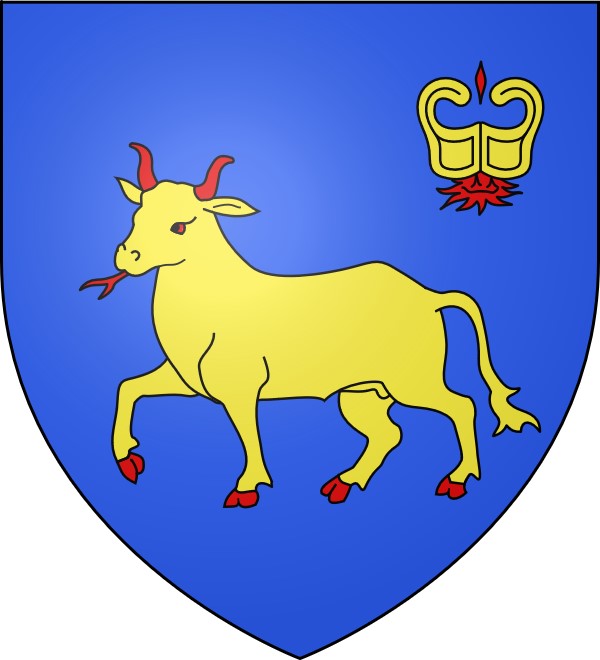
Other kinds of historical evidence attest to the importance of the fire striker: the coat of arms of the commune of Couffy still shows, at the top right, a gold fire striker with a red flint
[photo source: internet]
or depictions on coins, for example the reverse of a coin portraying Philip IV, dated 1626, engraved with a fire striker, a flint and flames.
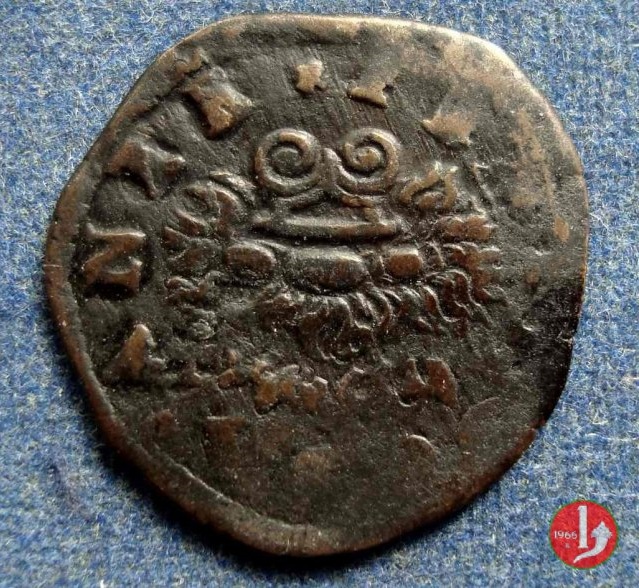
[my thanks to Massimo and www.lamoneta.it for the image. The reference page is available at the following link: http://numismatica-italiana.lamoneta.it/moneta/W-FIV/7]
It was in the 18th century that blacksmiths began to develop a greater sense of aesthetics, seeking ever more comfortable shapes and adding tools such as awls, corkscrews, small hammers and gun keys, but also far more frivolous implements such as pipe tobacco tampers.
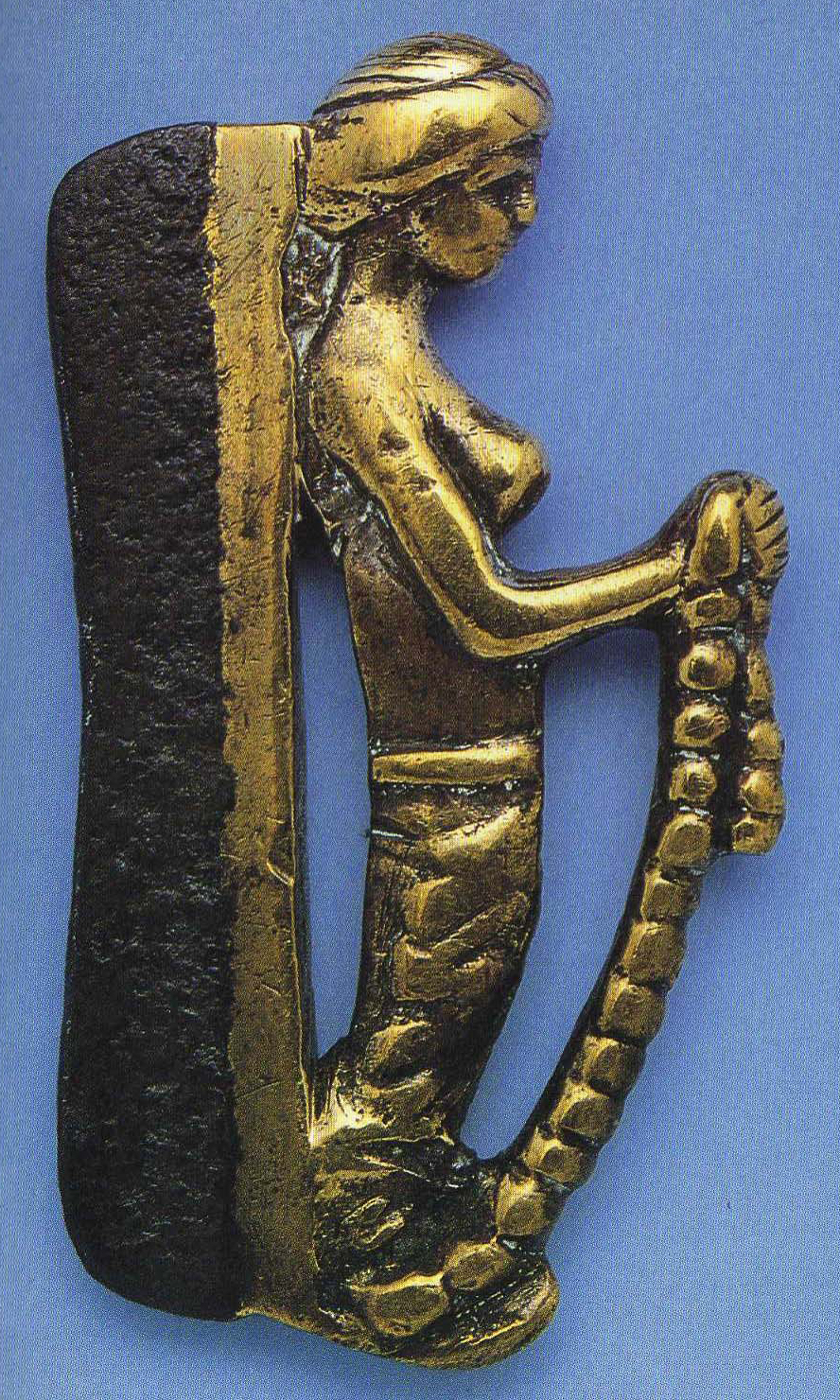
Fire striker with figurative bronze handle, France, 16th-17th century [photo source: Gli acciarini, De Sanctis (see bibliography)]
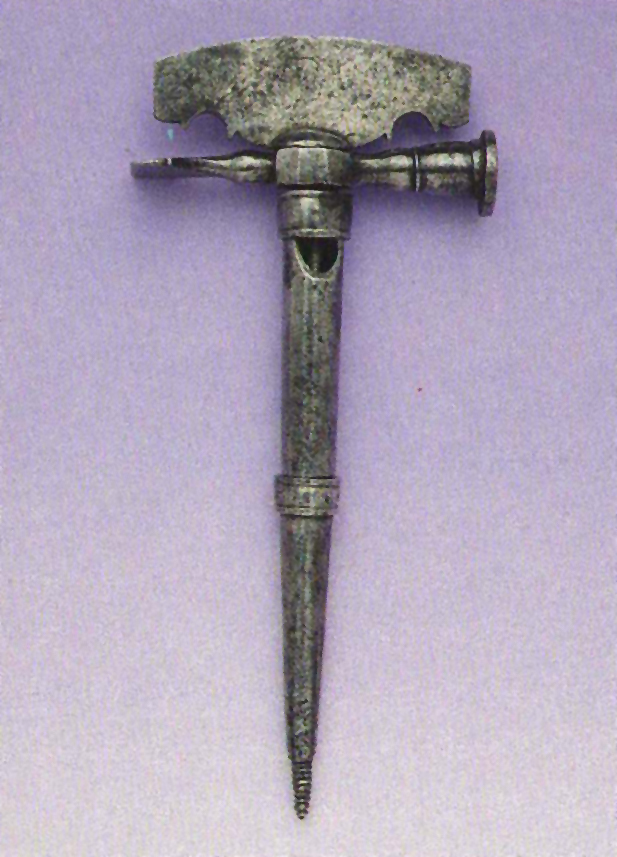
Combined with other tools: small hammer, penknife and corkscrew, 18th century [photo source: Gli acciarini, De Sanctis (see bibliography)]
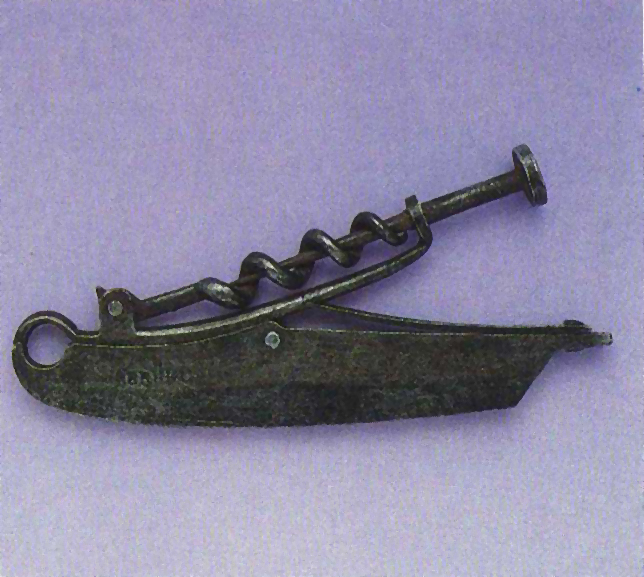
Combined with other tools: ember tongs, corkscrew and pipe tobacco tamper, 18th century [photo source: Gli acciarini, De Sanctis (see bibliography)]
To light a fire, a fire striker and a stone are not enough: at least one other essential element is needed, namely a tinder that can catch the first sparks without letting them die out. The tinder most used throughout history is undoubtedly the Fomentarius discussed earlier: in the pieces found in Otzi’s belt, the tinder fungus seems to contain traces of nitrogen, which make it more flammable and would make lighting easier. This may have been done by breaking the fungus into small pieces, soaking it in urine and then leaving it to dry completely, then grinding it further until it became a powder which, when struck by sparks, could start combustion.
The use of certain types of fungi as primary tinder, together with the fire striker for ignition, is attested by what Castor Durante da Gualdo writes in his Herbario Novo of 1585: “Fungi […] that grow on trees keep fire when boiled in lye, then they are dried, beaten, and boiled again in water with nitre”. Just as Otzi shows, the custom of treating tinder fungus with solutions that made it easier to ignite lasted for millennia, albeit with some innovations.
to see my fire strikers click here
to see the tutorial on lighting a fire with a fire striker click here
to see the tutorial on making tinder click here
BIBLIOGRAPHY
– Pliny the Elder; Naturalis Historia; Book VII; 198
– Theophrastus; De Igne;
– Titus Lucretius Carus; La Natura delle Cose, Book VI, 240;
– Virgil; Eneide; Book I; 285
– Castor Durante da Gualdo; Herbario Novo
– Due acciarini per fuoco da Castel Corno; Giorgio Chelidonio; from Ann. Mus. civ. Rovereto, sezione Archeologia, Scienze Naturali, Vol 5, 1989, pp. 75-84.
– Greek and Roman technology: a sourcebook : annotated translations of Greek and Latin texts and documents; John William Humphrey, John Peter Oleson, Andrew Neil Sherwood; Routledge; 1998; pp. 37-38.
– Le pietre del fuoco, folénde veronesi e selci europee; exhibition catalogue, Piazzotto Montevecchio, Bassano del Grappa, 7 May – 19 June 1988.
– La mummia dei ghiacci. Con Otzi alla scoperta del Neolitico; Gudrun Sulzenbacher; Folio Editore; 2000.
– Gli acciarini; Paolo De Sanctis, Maurizio Fantoni; BE-MA Editrice; 1991.
To explore the subject further, I recommend reading the study published by the University of Florence on how ancient fire strikers worked:
http://www.aspoitalia.it/attachments/146_metallurgiaacciarini.pdf