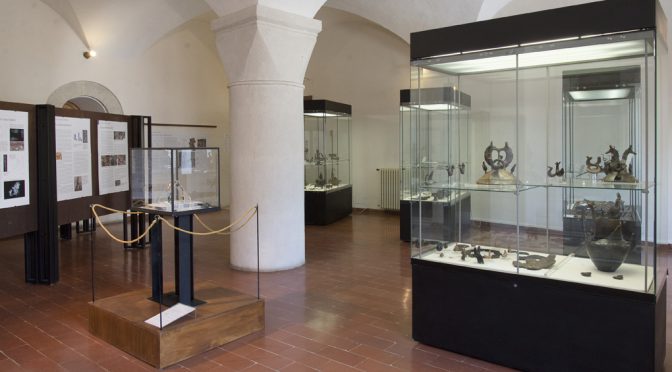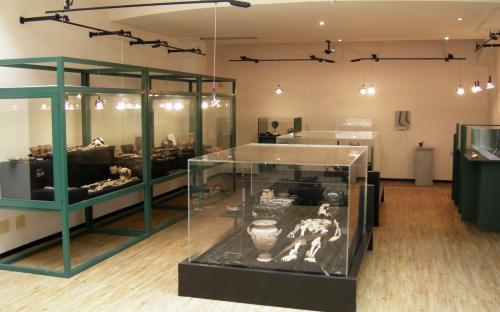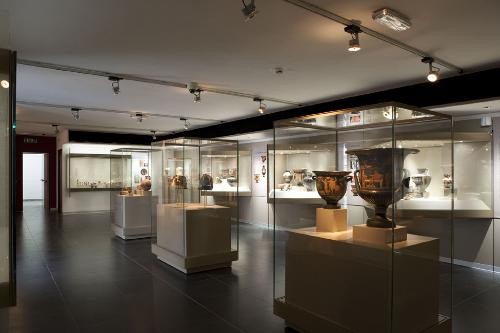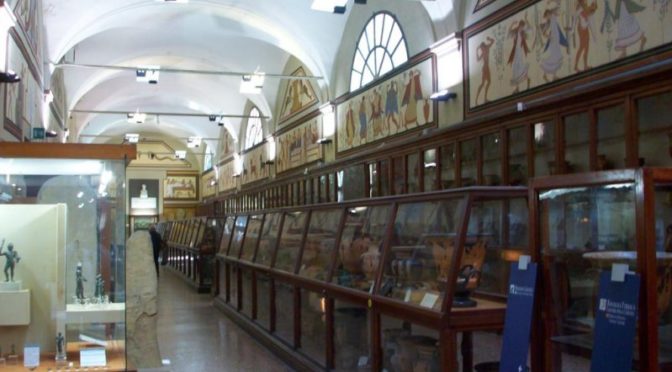
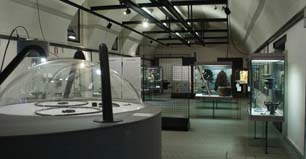
The material, arranged chronologically, illustrates human life in northern Italy from the Neolithic to the Roman colonisation in the 2nd and 1st centuries BC.
Continue reading Archaeological Museum, Castello Sforzesco, Milan (MI)
The material, arranged chronologically, illustrates human life in northern Italy from the Neolithic to the Roman colonisation in the 2nd and 1st centuries BC.
Continue reading Archaeological Museum, Castello Sforzesco, Milan (MI)
The monumental complex that houses the museum is built on the structures of the Roman theatre and partly reuses its materials and masonry. The exhibition documents the process through which the urban centre of Spoleto took shape, up to the municipium phase, and its relations with the surrounding territory.
The “Luigi Fantini” Museum in Monterenzio documents the history of settlement in the Idice and Zena valleys and displays the material recovered since the 1980s during the excavation campaigns at the Etruscan-Celtic settlement of Monte Bibele.
The Archaeological Museum has been renovated and enlarged, with new exhibition spaces in the building on via Nirone, reached by a walkway that crosses the Roman walls from the museum’s inner cloister.
The Civic Archaeological Museum of Bologna has been housed in the 15th-century Palazzo Galvani since its official opening on 25 September 1881.
The State Archaeological Museum, founded in 1996 through the joint efforts of the Archaeological Superintendency for the Marche and the Municipal Administration, is housed in a number of restored and modernised rooms of the monumental complex of S. Francesco, in the historic centre of Arcevia. Continue reading Archaeological Museum of Arcevia (AN)