
Reconstruction of a cuirass based on the model depicted on the handles of the Filottrano baking pan, which show a pair of embracing warriors gripping swords and wearing cuirasses comparable to Greek and Etruscan linothorakes.
The replica is made of layers of leather and felt, entirely hand-stitched, and has metal studs on the abdomen and on the back, exactly as depicted on the warriors of the baking pan. Across the chest there is a lattice of leather strips, which is also depicted on the bronze find; the shoulders are protected by a humeralis, again of felt and leather, edged with leather and hand-stitched. The humeralis is fastened at the back by two chased bronze studs bearing a floral geometric motif, and at the front by a chased bronze stud depicting a triskel and by leather laces.
Two overlapping layers of pteruges protect the body at the hips and thighs, without hindering the movement of the pelvis and legs. Indeed, as can be seen on the warriors of the baking pan, the two layers of pteruges overlap in a staggered pattern, so that there is always a flap of leather or felt between the body and a possible blow.
Historical evidence
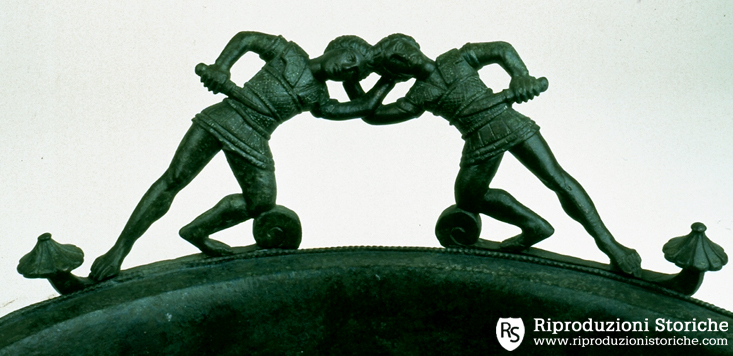
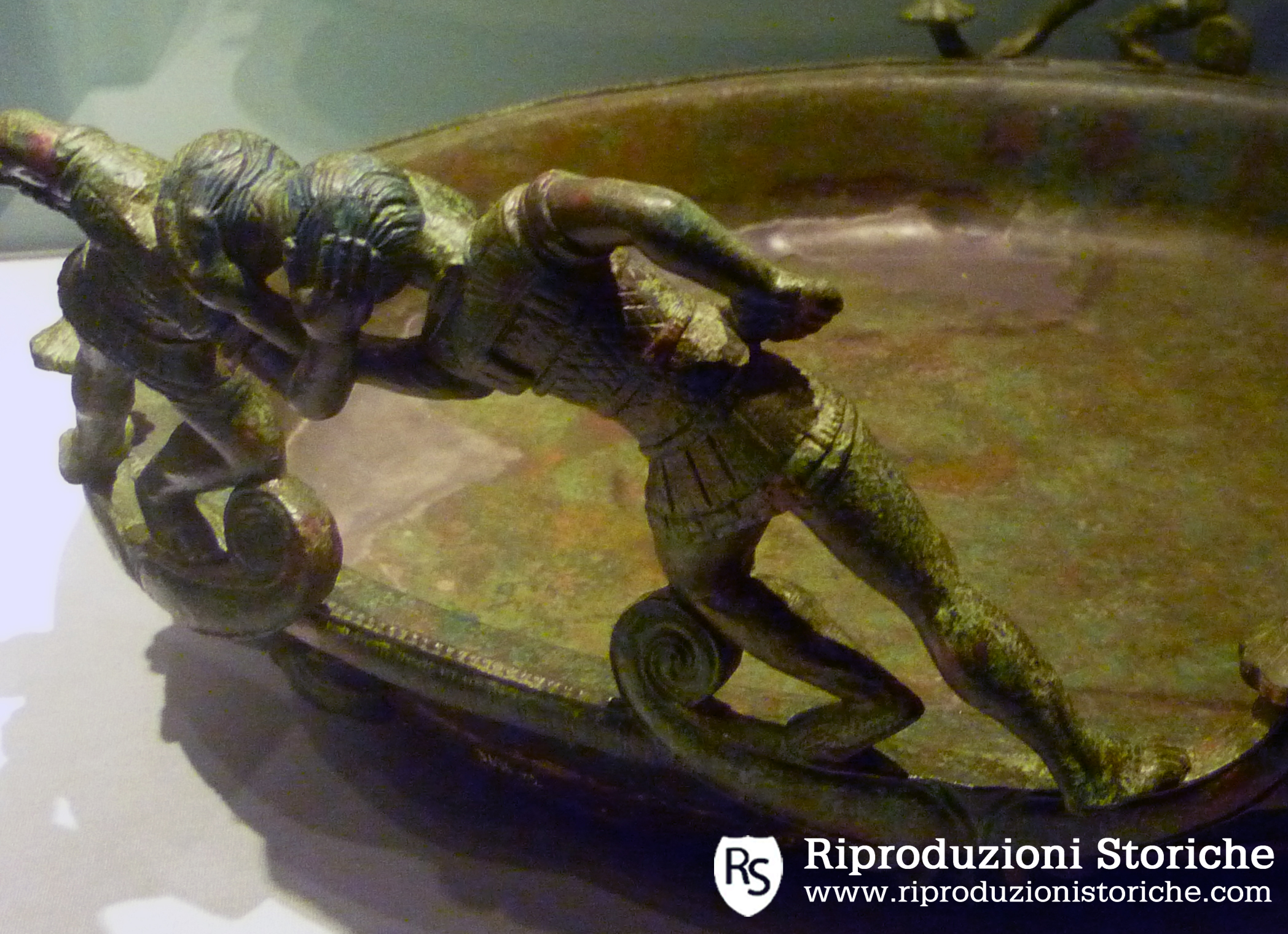
Etrusco-Italic bronze baking pan, 4th century BC, Santa Paolina di Filottrano (AN), Archaeological Museum of the Marche (AN)
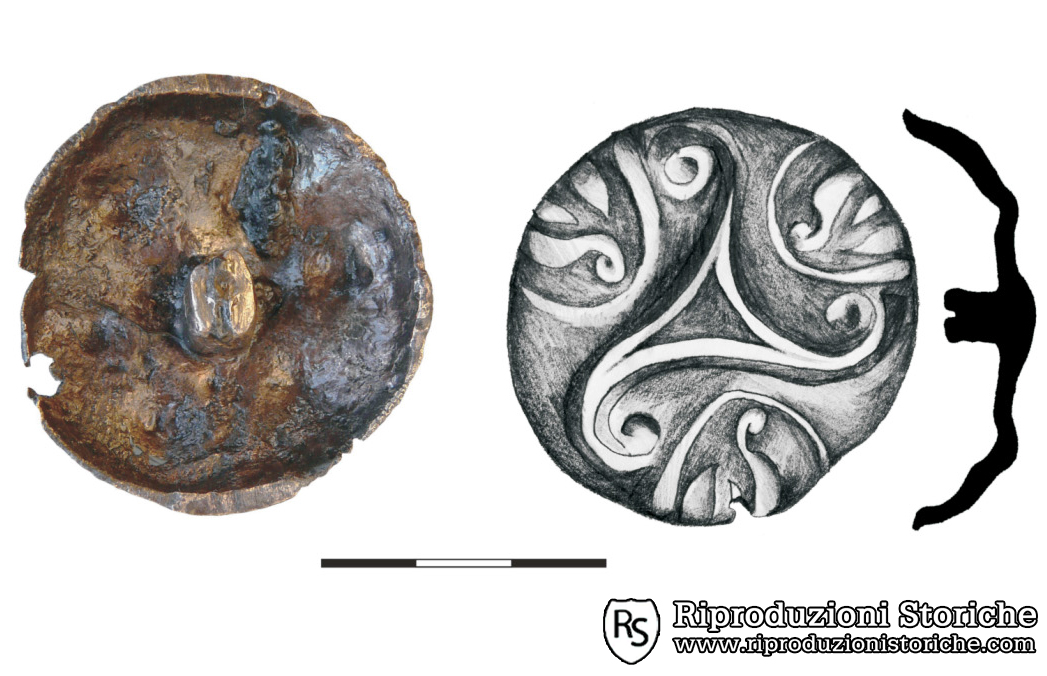
Bronze phalera interpreted as a possible armour appliqué, from Târgu Mureş (Romania), 3rd century BC, Mureş County Museum (Romania)
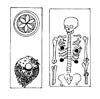
Armour appliqué, chariot burial of the warrior of Gorge-Meillet, 4th century BC, St-Germain-en-Laye, Musée des Antiquités Nationales (France)